SCRIPT ADAPTATION PROJECT OF COLOMBIAN WRITER SOLEDAD ACOSTA’S NOVEL DOLORES
In a recently independent country troubled by the endurance of its colonial legacies and the imperative of paving the way for the emergence of new generations capable of carrying out a process of modernization, Dolores narrates the story of a young woman hitting the end of her adolescence that ends up contracting leprosy despite her relative advantageous position in society as an upper-middle class provincial, mestizo woman.
While diseases like leprosy, malaria and elephantiasis were somewhat common in XIX century Colombian society given the amount of scientific knowledge available at the time, in the novel the disease is significant as it jeopardizes Dolores’ future and capacity to reproduce the social structure by marrying a man from her social class and by giving birth to children to build and populate the nation.
On the other hand, Dolores is frequently read by scholars of gender and feminist studies as an inquiry on feminine agency and the search for alternative ways of subjectivation through the embracement of a wide range of modern social practices as precursors of a scientific attitude towards the world but from geographically peripheral region. It is therefore an attitude that is closely linked, in the context of the adapted story to romanticism as a literary movement; the work of the poets from the XIX century suddenly at odds with the economic instability of their craft, their ways of attempting to create knowledge of the world through the senses in a fast pace market economy already developing at full length in Europe and North America.
In the process of writing this script/adaptation of the novel, I relied on several visual and textual repositories in order to fill the gaps that I considered existed in the original literary source has due to a variety of reasons related to Soledad Acosta de Samper’s minor position as an author within a XIX century landscape of writers. Some of these repositories are part of both the BBCC and BADAC digital collections.
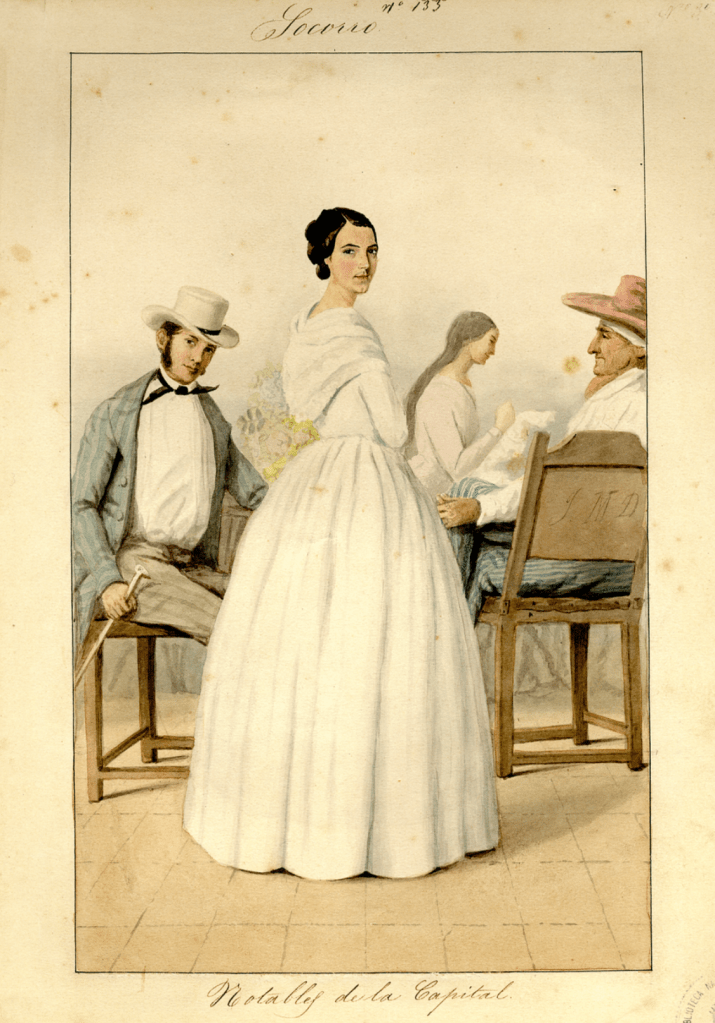
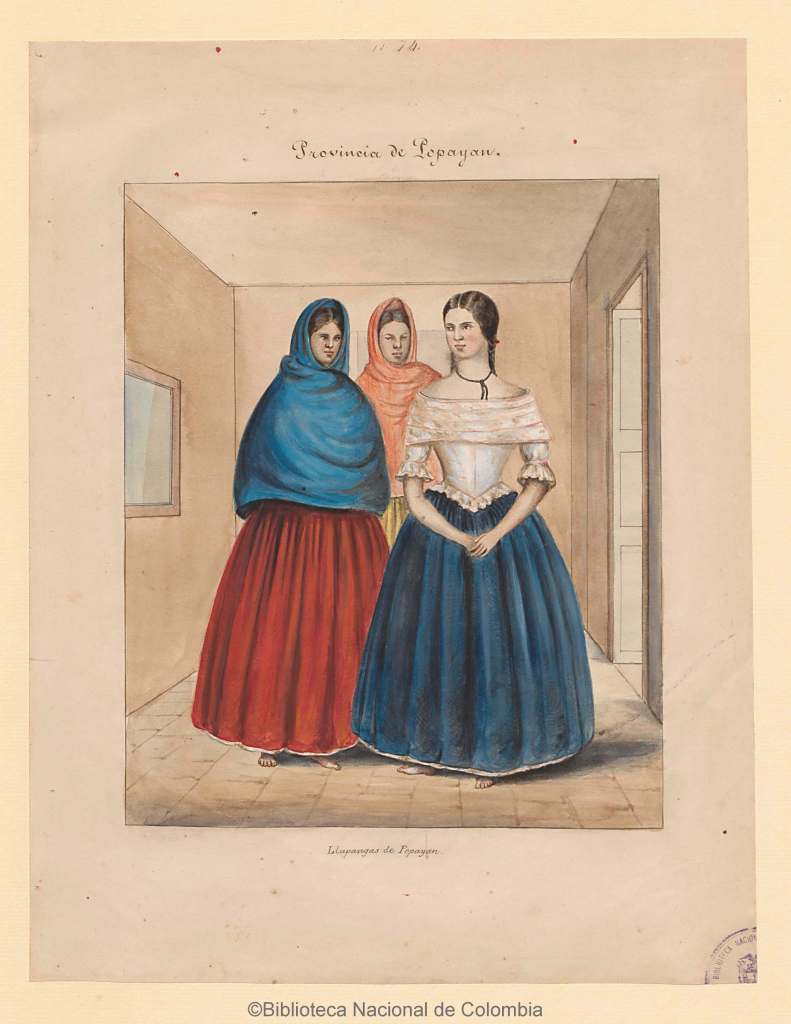
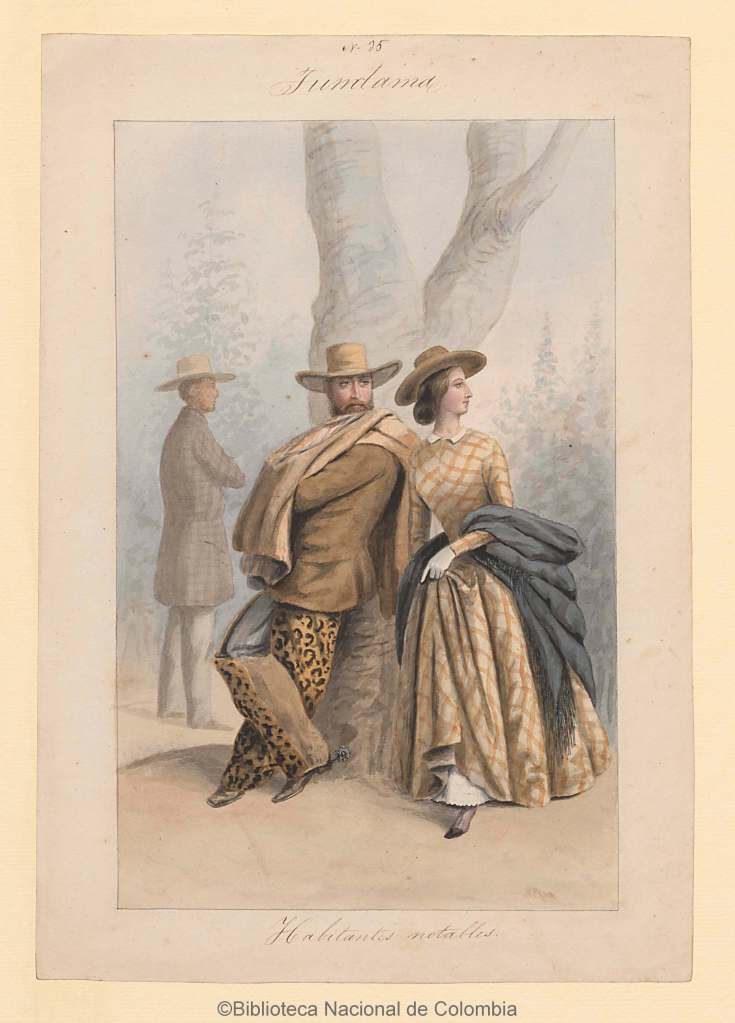
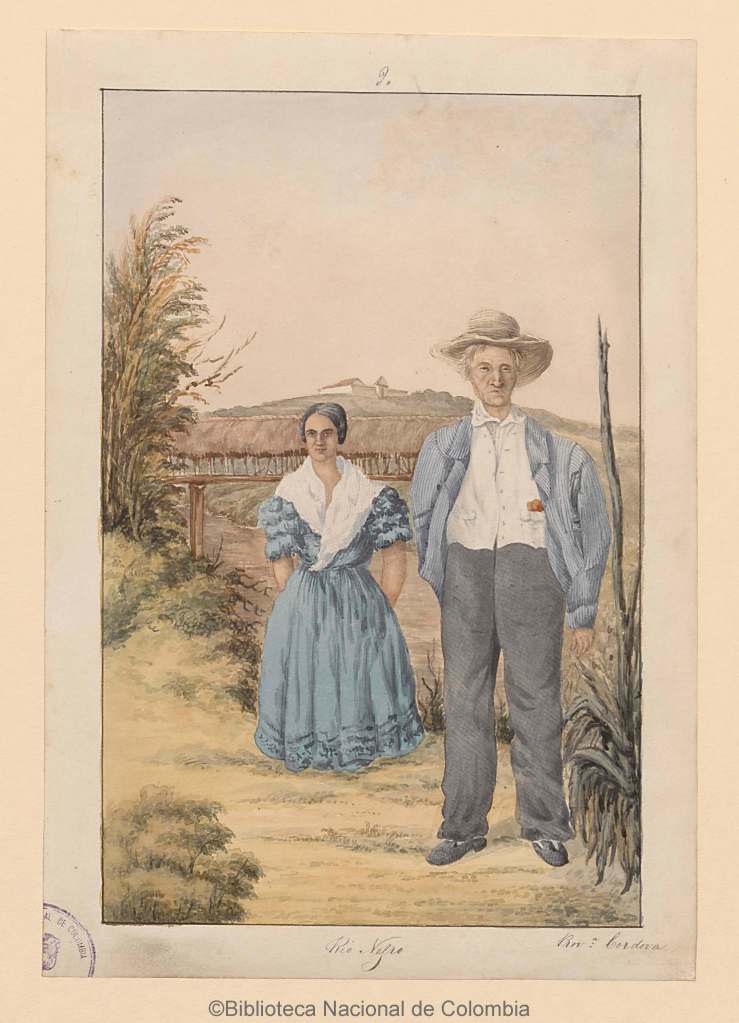
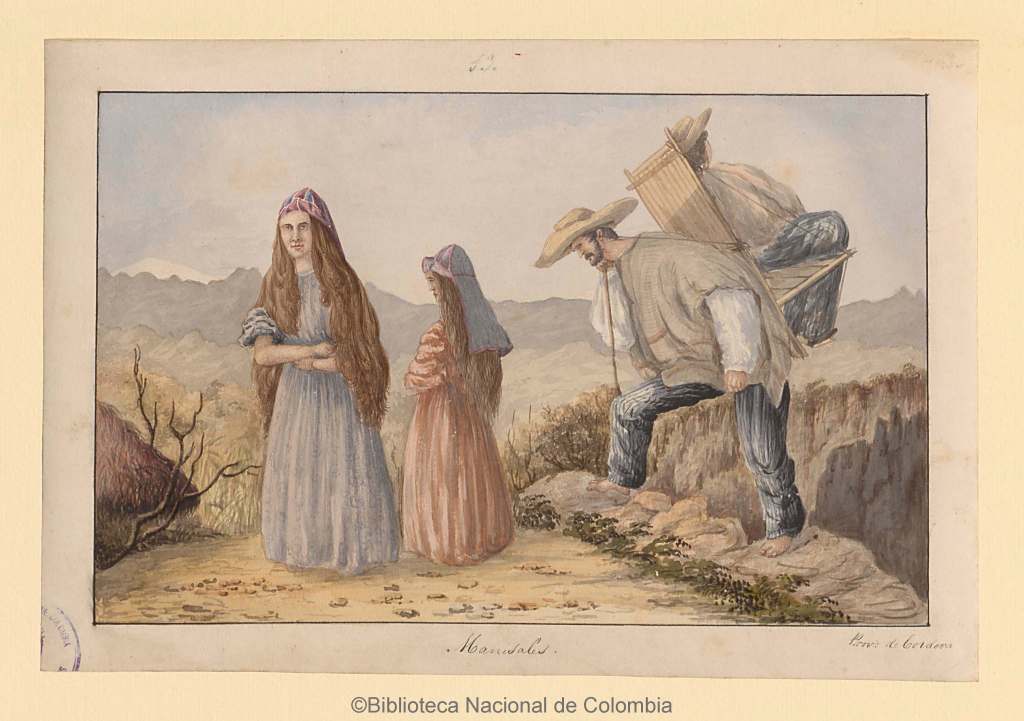
I also relied on the Illustrations by the Chorographic Commission digitized by Biblioteca Nacional de Colombia: the largest collection of watercolors depicting 19th-century regional customs in the country. The Commission was the cartographic project that had the goal of creating a map of the country as part of a political agenda in a recently independent country, in need of integrating the different regions and its identities into a singular project of State-building nation. As previous botanical expeditions that took place in America from Colonial times to XVIII and the first half of the XIX century, the political goal of the cartographic project was to understand the national geography in order to facilitate its governance.
Historian Ricardo Rivadeneira Velásquez, current director of the District Archive of the city of Bogotá, explains that influenced by the Romantic tradition, these prints allowed to merge both impressions (as precursor of scientific knowledge) on the material and cultural life of XIX century society and the “sensitive elements of everyday life”.
To obtain copyright of this project (available here) for screening adaptation, email andreadiazmiranda@gmail.com

 CV
CV 